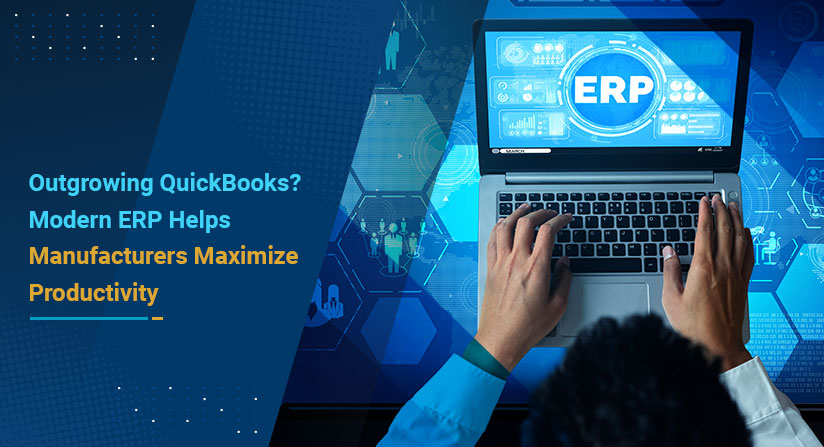
For many small and mid-sized manufacturers, QuickBooks has been a lifesaver. It’s a familiar, affordable solution that handles basic accounting needs. However, as your business grows, QuickBooks can become a bottleneck. It may need more features and scalability to optimize your operations and stay competitive.
This blog post will explore why manufacturers outgrow QuickBooks and how a modern Enterprise Resource Planning (ERP) system can help to maximize productivity.
Signs You’ve Outgrown QuickBooks
1. Inventory Management Struggles
QuickBooks often needs more inventory management capabilities. If you deal with complex bills of materials (BOMs), multi-location inventory, or frequent stockouts, you will need more inventory functionality than QuickBooks offers.
2. Manufacturing Visibility Issues
QuickBooks does not provide the real-time data and insights needed to track production processes, identify bottlenecks, and optimize scheduling.
3. Integration Headaches
Integrating QuickBooks with other business systems like CRM or MRP software can be complex and time-consuming. A lack of integration between systems forces error-prone and time-consuming redundant data entry. A modern ERP offers seamless integration out of the box.
4. Reporting Limitations
While useful for fundamental analysis, QuickBooks’ reporting features may need to be improved for a comprehensive review of your manufacturing performance. An ERP system that generates detailed reports is essential for identifying trends and making data-driven decisions.
5. User and Volume Limitations
QuickBooks has a user limit, which can restrict access for growing teams in your manufacturing operation. It also has a limited amount of data it can process before it bogs down and causes delays in accessing information. Additionally, it risks a system crash and corrupted or lost data.
6. Industry-specific Challenges
QuickBooks is a one-size-fits-all product not intended to meet the unique requirements of a specific industry.
7. Need for GAAP Compliance
QuickBooks does not have a documented and GAAP-compliant audit trail of transactions to make the financial reporting process transparent. Companies that receive outside funding or produce for government entities must have this financial reporting to meet regulatory requirements.
How Modern ERP Empowers Manufacturers
A modern ERP system is designed specifically for manufacturers’ needs. Beyond basic accounting, it offers a comprehensive suite of features that can transform operations. The following outlines how modern ERP helps manufacturers.
1. Robust Financial Management
ERP connects financial operations, streamlines and accelerates transactions, and improves cash flow. It automates accounting processes from journal entries to receivables and payables and more. It accelerates banking, reconciliations, and financial close processes. ERP financials manage cash flow, control budgets, and monitor job costing. It automatically tracks fixed assets and delivers real-time reporting options for planning and forecasting.
2. Enhanced Inventory Management
An ERP system provides robust inventory management features, including multi-warehouse tracking, lot control, serial number tracking, and real-time inventory visibility. These features empower you to optimize stock levels, reduce carrying costs, and prevent stockouts.
3. Improved Production Planning and Scheduling
An ERP system offers tools for production planning, scheduling, and material requirements planning (MRP). These tools enable you to create realistic production schedules, identify potential bottlenecks, and ensure you have the suitable materials to meet production demands.
4. Real-Time Visibility and Data Insights
A modern ERP provides a central repository for all your manufacturing data. This allows for real-time visibility into every aspect of your operation, from shop floor activity to machine performance. You can use this data to identify areas for improvement, make data-driven decisions, and optimize your overall productivity.
5. Streamlined Integrations
Modern ERPs integrate seamlessly with other business systems like CRM, CAD, and business intelligence (BI) tools. This eliminates data silos and ensures all your departments are working from the same data set. It also eliminates errors and delivers real-time data and analysis.
6. Scalability and Flexibility
An ERP system is designed to grow with your business. It can accommodate your increasing complexity and data volumes, ensuring you have the tools to stay competitive in the long run.
7. Greater Competitive Advantage
Moving from QuickBooks to ERP accounting and financials on a single platform unites business processes, from accounting and sales to purchasing, CRM, inventory management, and manufacturing and distribution operations. It promotes visibility into all operations, with access to up-to-the-minute intelligence and real-time reporting. Organizations can choose the appropriate inventory valuation method, customize reports, and transact in multiple currencies. ERP delivers flexibility, visibility, and forecasting – options that QuickBooks never intended to produce.
Making the Move to Modern ERP
Transitioning from QuickBooks to a modern ERP system can seem daunting, but the benefits are worth the investment. Here are some tips for a smooth transition:
1. Identify your needs
Clearly define your current pain points and future goals. This will help you choose an ERP system that meets your specific requirements.
2. Do your research
There are many ERP vendors on the market. Evaluate different solutions based on features, functionality, scalability, and ease of use.
3. Consider cloud-based solutions
Cloud-based ERPs offer several advantages, including scalability, affordability, and ease of deployment.
4. Get buy-in from stakeholders
Ensure everyone in your organization understands the benefits of moving to an ERP system.
5. Partner with an implementation expert
Choose a qualified implementation partner to help you configure the system to meet your specific needs and ensure a smooth transition.
Conclusion
QuickBooks serves an essential purpose for early-stage businesses. However, it can’t accommodate the needs of a growing manufacturing firm. A modern ERP system can streamline operations, optimize production processes, and maximize productivity. By investing in an ERP system, you’re laying the foundation for future growth and success.