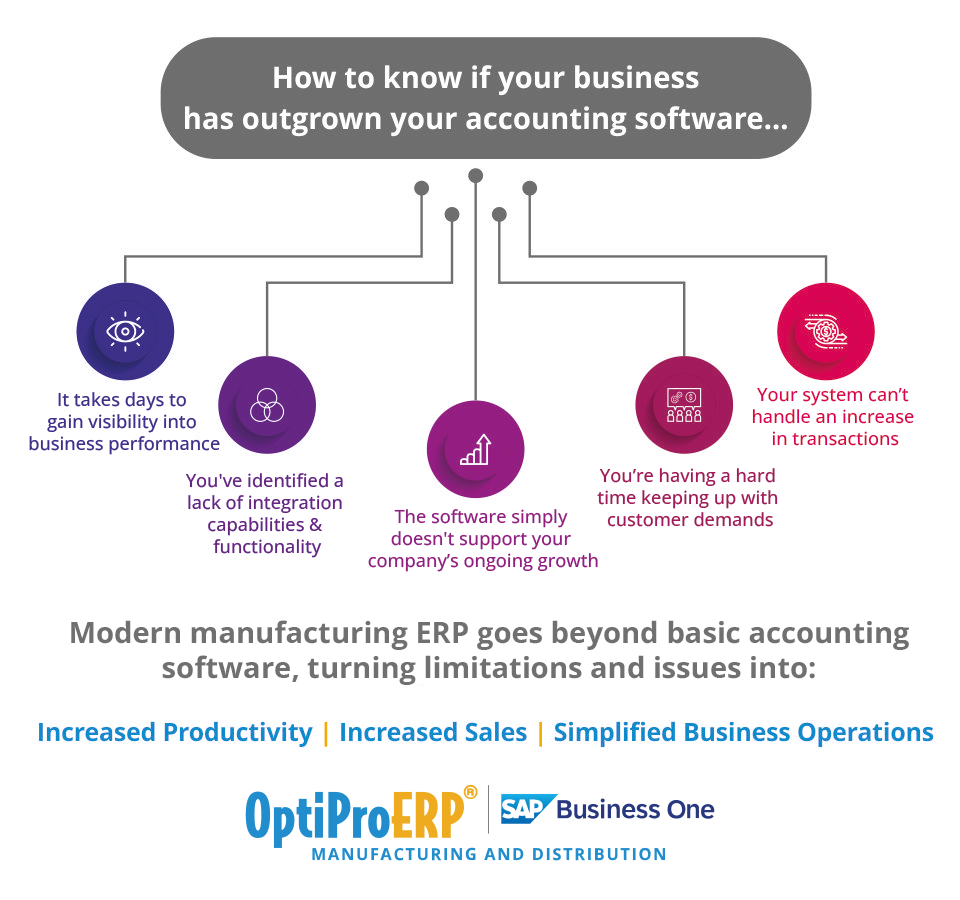
When your operations are small, stand-alone accounting software like QuickBooks works well. However, as your business grows, its limitations hold back your operations. For example, QuickBooks has limited reporting and analytics, only light inventory capabilities, and no purchasing and procurement.
It gets even more complex as a manufacturer because you must maintain production schedules and ensure quality products. In addition, you need the right resources to deliver on time so you don’t hurt your business reputation and lose customers.


OptiPro Manufacturing with SAP Business One has all the functionality a growing manufacturing business needs. It streamlines business processes across the organization to increase productivity. It connects the enterprise for real-time transparency and greater employee collaboration. OptiPro Manufacturing with SAP Business One provides deep insight into what is happening in the organization for fast and informed decisions. You can leverage production data to forecast demand and keep your deliveries on time.
Since QuickBooks is an accounting system, it does not offer data from other parts of the organization. This makes it difficult to achieve any business intelligence. It is easier to understand inventory needs by connecting to the shop floor. It also has limitations with file size, data, and the number of users. QuickBooks isn’t built for a growing manufacturing business. It simply lacks the industry-specific tools to support its operational needs.
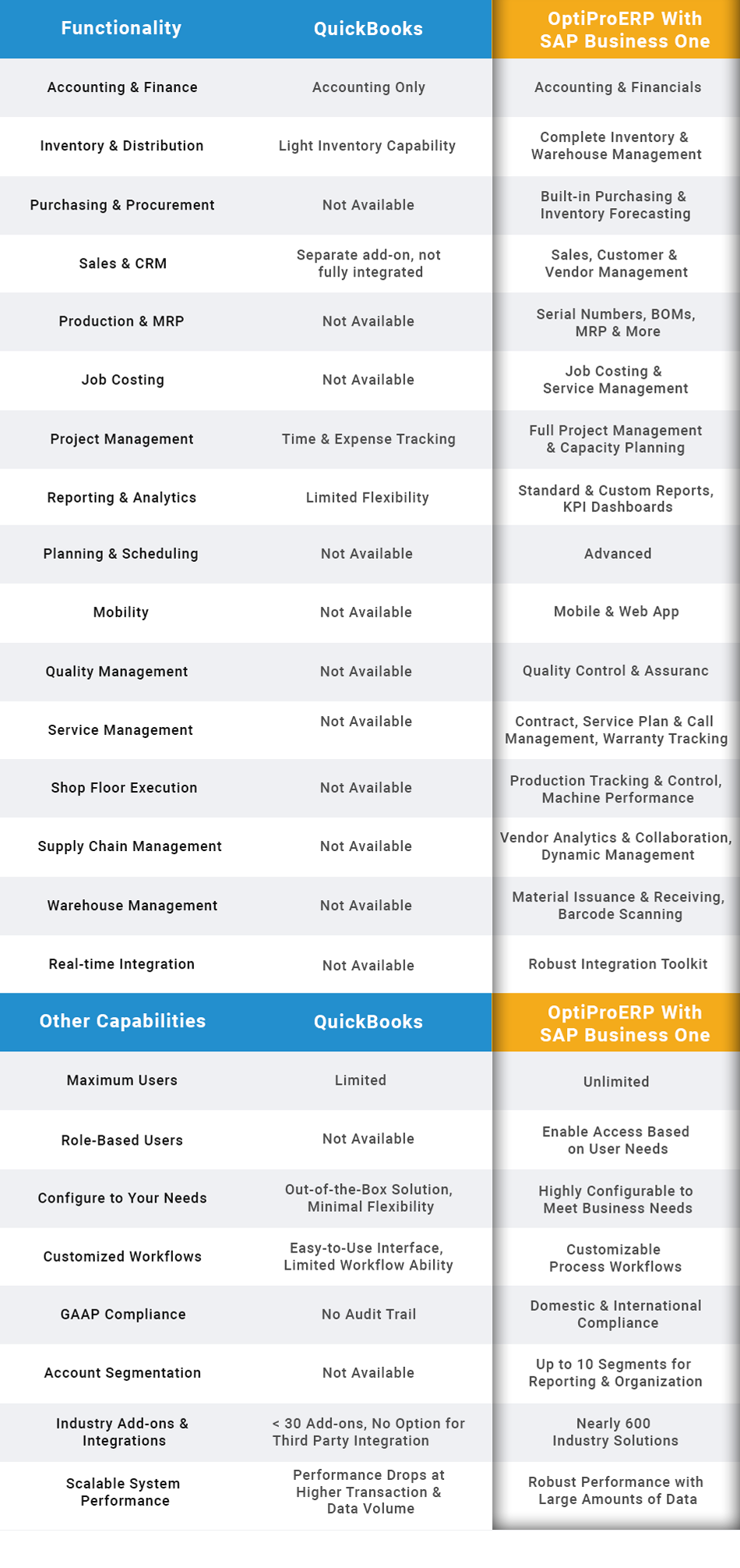
As mentioned before, QuickBooks works well for smaller businesses. It handles accounting, payroll, order management, light inventory, and basic reporting. Beyond that, it doesn’t provide the functionality a growing manufacturing business needs. Let’s examine some key components to see how the two software solutions differ.
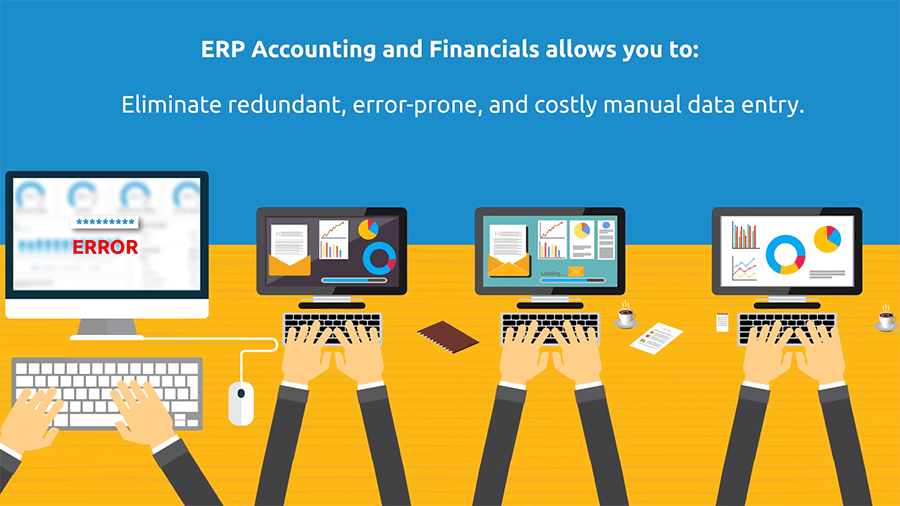
QuickBooks is a standalone system that can integrate with some third-party applications. The problem is that these connected systems all have different databases. So, you can’t get accurate and real-time information. IT must ensure the others are unaffected if you need to update one system. In addition, manufacturers have complex inventory needs, and QuickBooks provides only basic functionality and no lot tracking. Controlling inventory is essential to keep costs down and have visibility to trends.
OptiPro Manufacturing with SAP Business One integrates operations across the business. Everyone works from the same database, so there is a single version of the truth. Processes flow smoothly across departments. There is real-time synchronization of goods receipts and inventory levels to inform purchasing. Staff can easily communicate and collaborate. It provides advanced manufacturing and supply chain management capabilities. Industry best practices get used to help growing businesses optimize. Workflow gets automated for better productivity, greater accuracy, and reduced costs.
OptiPro Manufacturing with SAP Business One gives you a 360-degree enterprise-wide view. Every part of operations works seamlessly together, so there is clarity about data. It lets you see what is happening with orders, production, the supply chain, deliveries, inventory, etc. To grow and compete, you need to spot problems and opportunities. OptiPro Manufacturing with SAP Business One has customizable dashboards that provide updates on KPIs. Complex reports are generated for quick insight. Historical data can show trends, and forecasts can be created. These are all key to helping your manufacturing business grow and profit.
You can adapt OptiPro Manufacturing with SAP Business One to suit your manufacturing business needs. The system can be configured to fit the way you need to work. It also provides best industry practices to help you streamline processes. The system is designed to scale with your business. It has innovative technology to support your business processes and supports 28 languages and 44 countries if you want to expand globally. In addition, it offers mobile access so workers can retrieve business data while on the move. These features help your manufacturing company be more productive, make better decisions, improve profitability, and quickly adjust to change.


