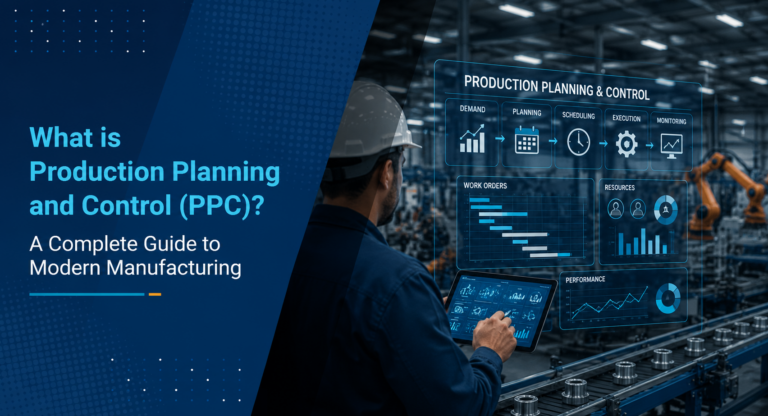
A production manager at a growing manufacturing facility faced a critical challenge: selecting the right production approach to support business growth, control operational complexity, and improve shop-floor efficiency. The facility operated two distinct production lines to meet diverse customer requirements. One line produced highly customized industrial pumps built to specific customer specifications, while the other manufactured standard replacement components in high volumes each week. The company attempted to manage both operations with the same production planning processes, inventory policies, and shop-floor controls.
The consequences soon became evident:
- Custom orders frequently missed their promised delivery dates.
- Inventory levels continued to rise despite ongoing production.
- Production schedules required constant adjustments to accommodate shifting priorities.
- Engineering and production teams struggled to keep pace with frequent design revisions.
- Production planners found it increasingly difficult to balance available capacity with fluctuating demand.
These challenges were not due to poor execution. Instead, they stemmed from applying the same planning and operational approach to two fundamentally different manufacturing environments. Therefore, understanding the differences among discrete, repetitive, and mixed-mode manufacturing is essential to improving production planning, inventory control, and overall operational efficiency.
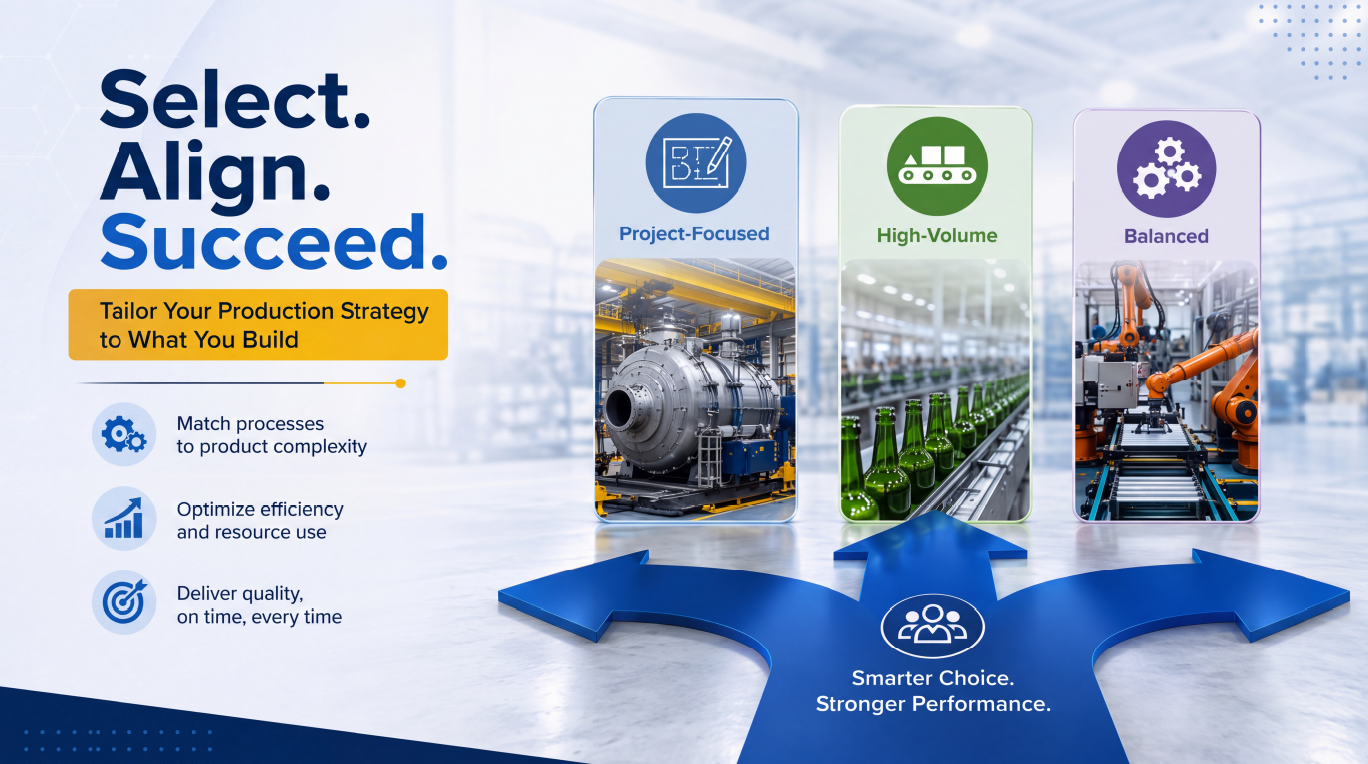
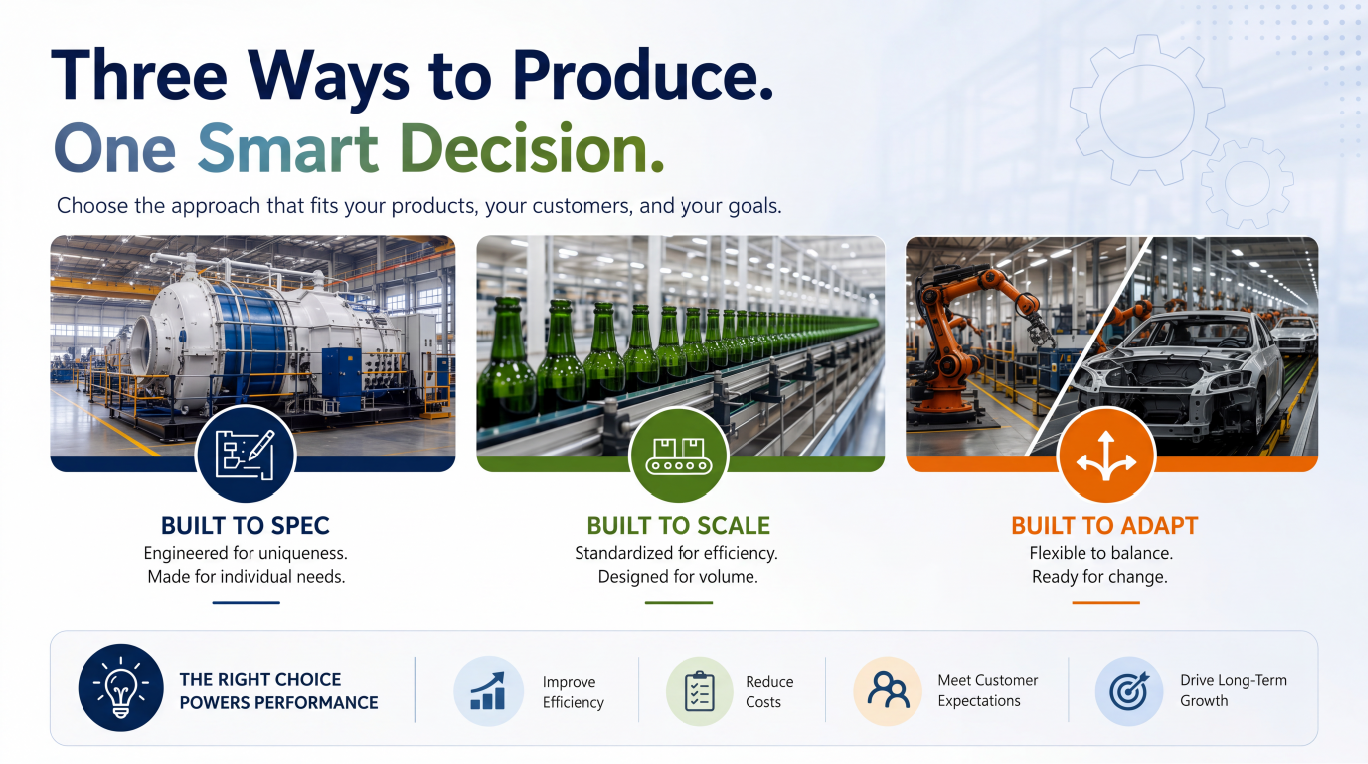
Understanding the Three Manufacturing Approaches
Why the production approach matters: Manufacturers may use the same equipment, labor, and resources, yet their production methods can differ significantly based on product complexity, demand patterns, and engineering requirements. Understanding these differences helps manufacturers align planning, scheduling, inventory control, and shop-floor execution with how products are designed, produced, and delivered.
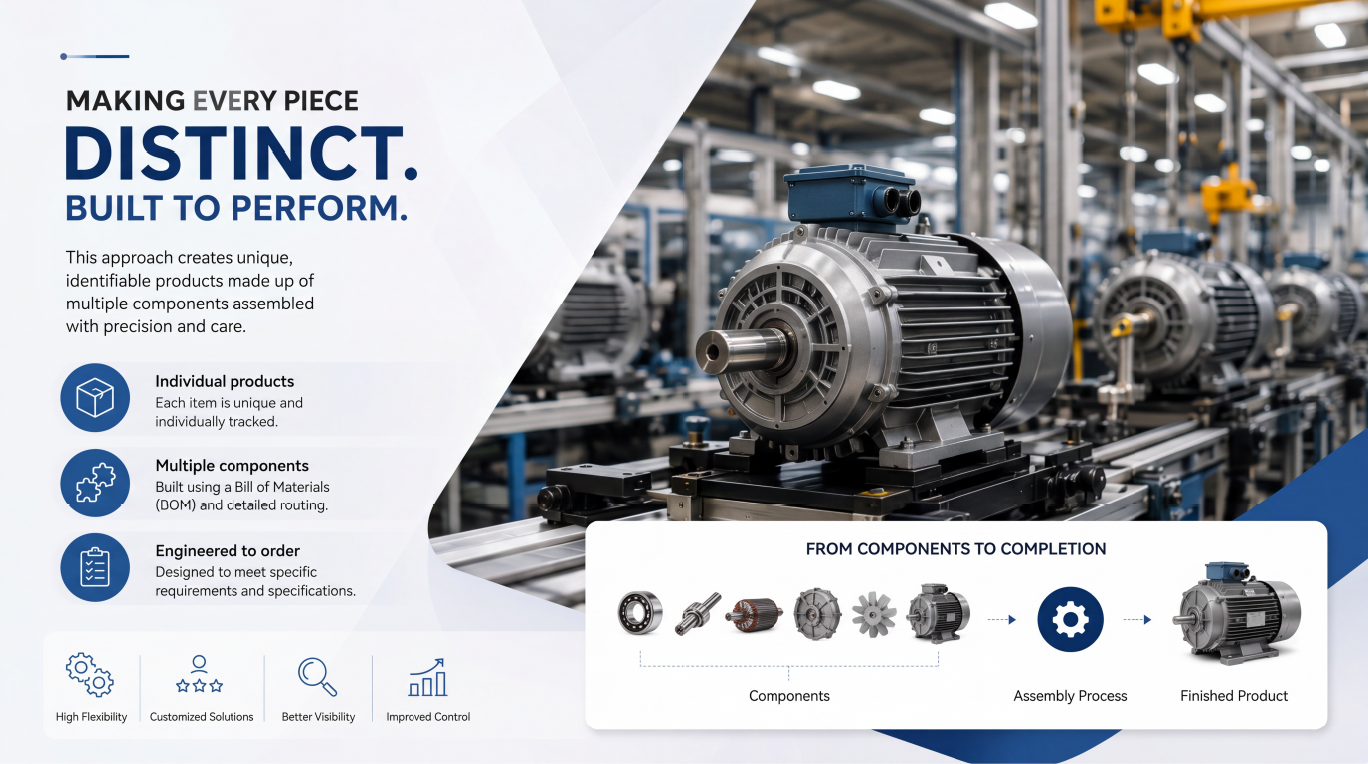
Discrete Manufacturing
This production approach focuses on manufacturing discrete, countable products. Each item can be individually identified and typically consists of multiple components assembled per a Bill of Materials (BOM).
Common examples include:
- Automotive components
- Medical devices
- Industrial machinery
- Electronics
- Aerospace equipment
Key characteristics:
- Multi-level BOM structures
- Engineering change management
- Production orders and work orders
- Lot and serial number tracking
- Product configurability
- Engineer-to-order (ETO) and make-to-order (MTO) capabilities
Repetitive Manufacturing
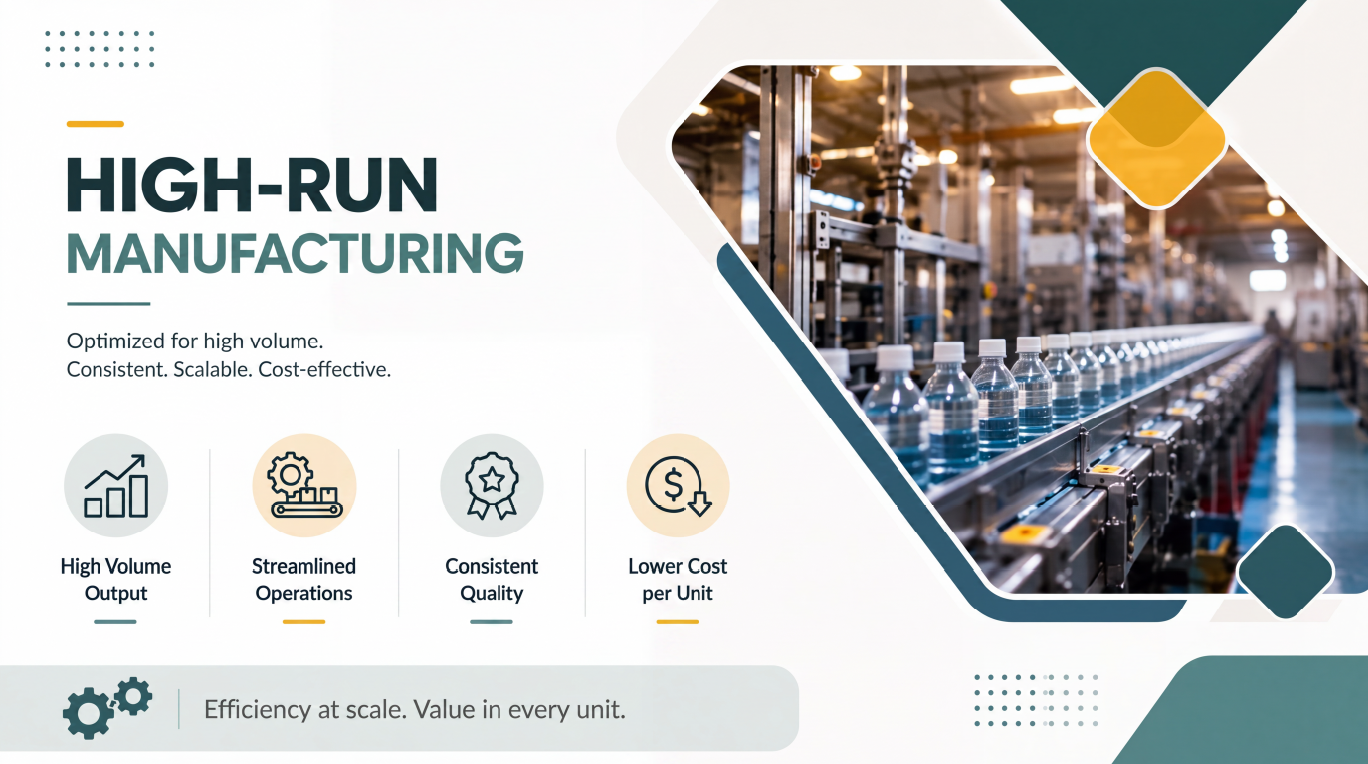
This production approach is designed for the continuous production of standardized products with stable demand patterns. Products move through predefined production processes in a repetitive manner, using consistent workflows, materials, and sequences.
Common examples Include:
- Batteries
- Household products
- Automotive parts
- Packaging materials
Key characteristics:
- High production volume
- Fixed routing sequences
- Continuous production flow
- Predictable demand
Mixed-Mode Manufacturing
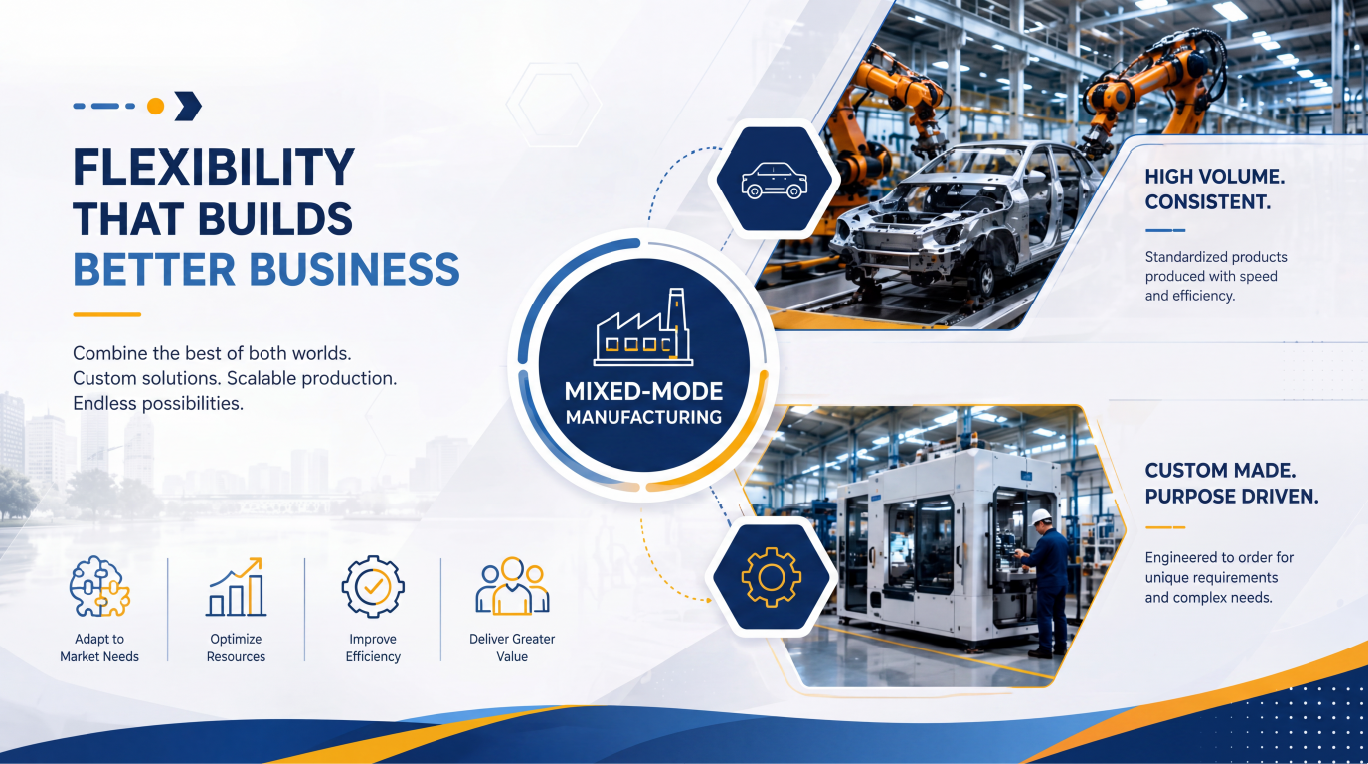
This production approach combines two or more manufacturing methods, such as discrete, repetitive, batch, or process manufacturing, within the same organization. For example, an electronics manufacturer may produce standard circuit boards in high volumes using repetitive manufacturing while also producing customized control panels using discrete manufacturing.
Common examples include:
- Furniture manufacturers
- Industrial equipment manufacturers
- Electrical panel builders
- HVAC equipment companies
Key characteristics:
- Combination of multiple manufacturing methods
- High operational flexibility
- Integrated planning and scheduling
- Varied production volumes
How Do You Determine the Right Production Approach?
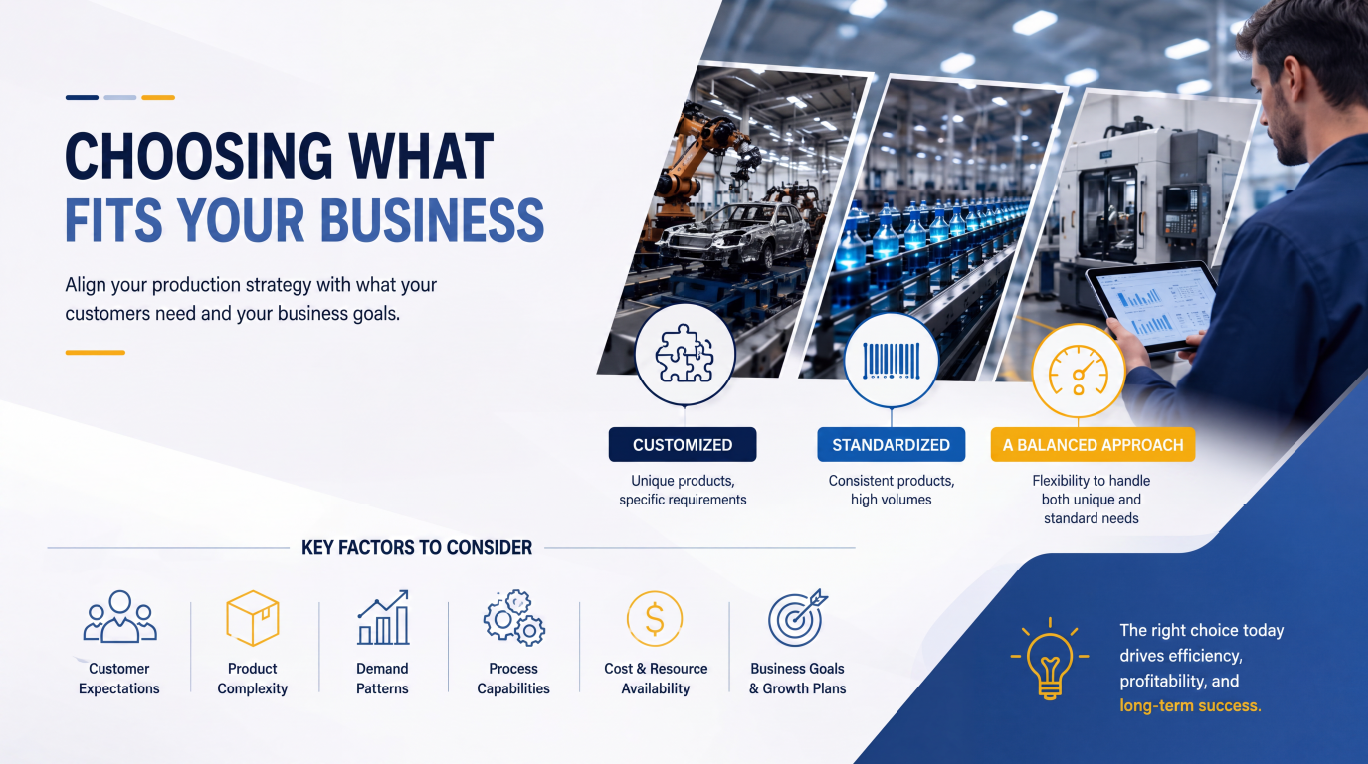
The key to selecting the right production approach is understanding how products are planned, produced, and delivered. The most appropriate approach depends on engineering requirements, production volume, demand patterns, and overall product complexity.
Discrete manufacturing is well suited to products that can be individually identified and tracked, while repetitive manufacturing is best suited to standardized products produced in high volumes. Mixed-mode manufacturing is ideal for manufacturers that manage both customized and standardized production within the same facility.
Common Mistakes When Choosing a Production Approach
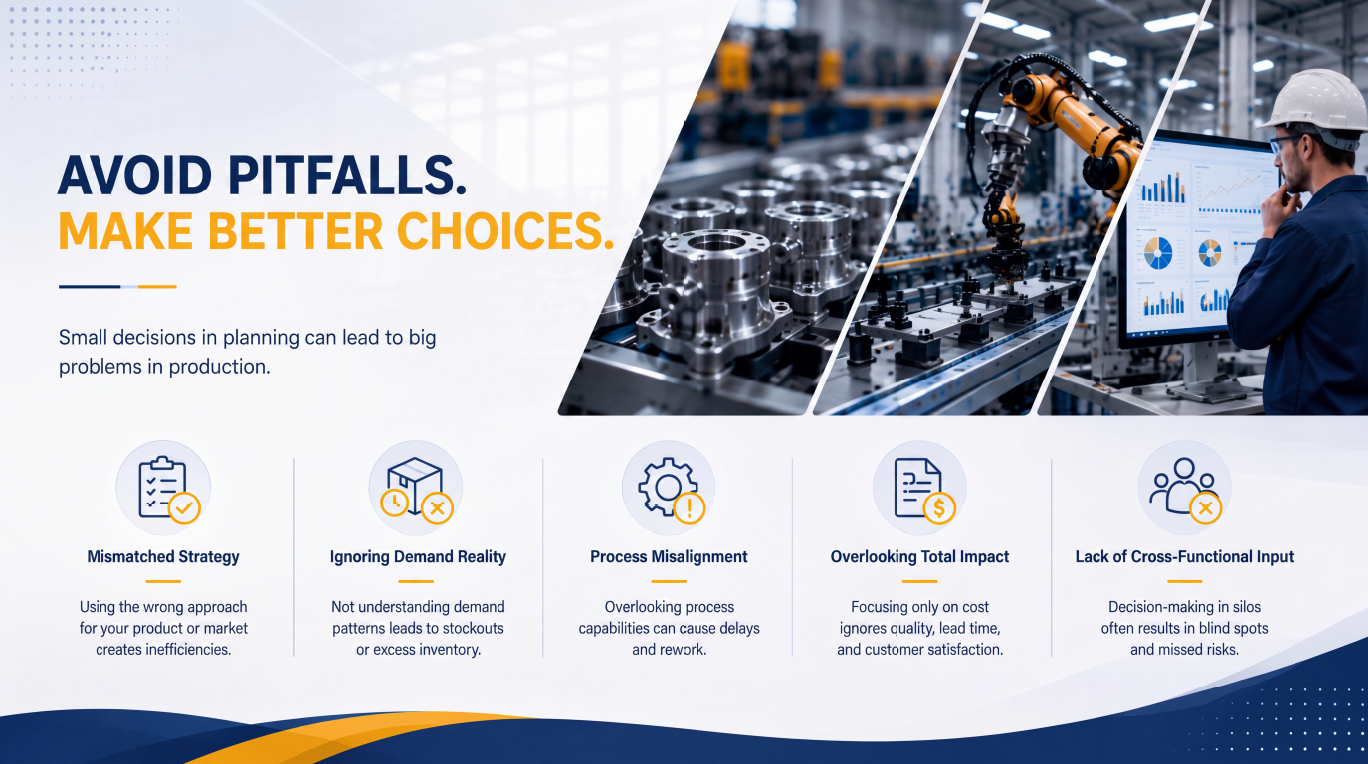
Many operational issues arise when the production approach is not chosen correctly or when it does not align with the facility’s actual manufacturing requirements. Some common mistakes include:
- Treating custom production like high-volume production
- Manufacturers often use repetitive production planning methods for customized products, which can lead to material shortages, frequent schedule changes, and excess inventory.
- Applying the same planning method across all products
- Products with varying demand patterns, lead times, production volumes, and levels of customization require different planning strategies.
- Ignoring demand patterns
- Manufacturers often fail to distinguish between predictable and order-driven demand, which can lead to inaccurate production and inventory planning.
- Underestimating product complexity
- Choosing an inappropriate production approach for complex, engineered products can lead to inaccurate planning, shop-floor inefficiencies, and production delays.
Best Practices for Managing Different Production Approaches
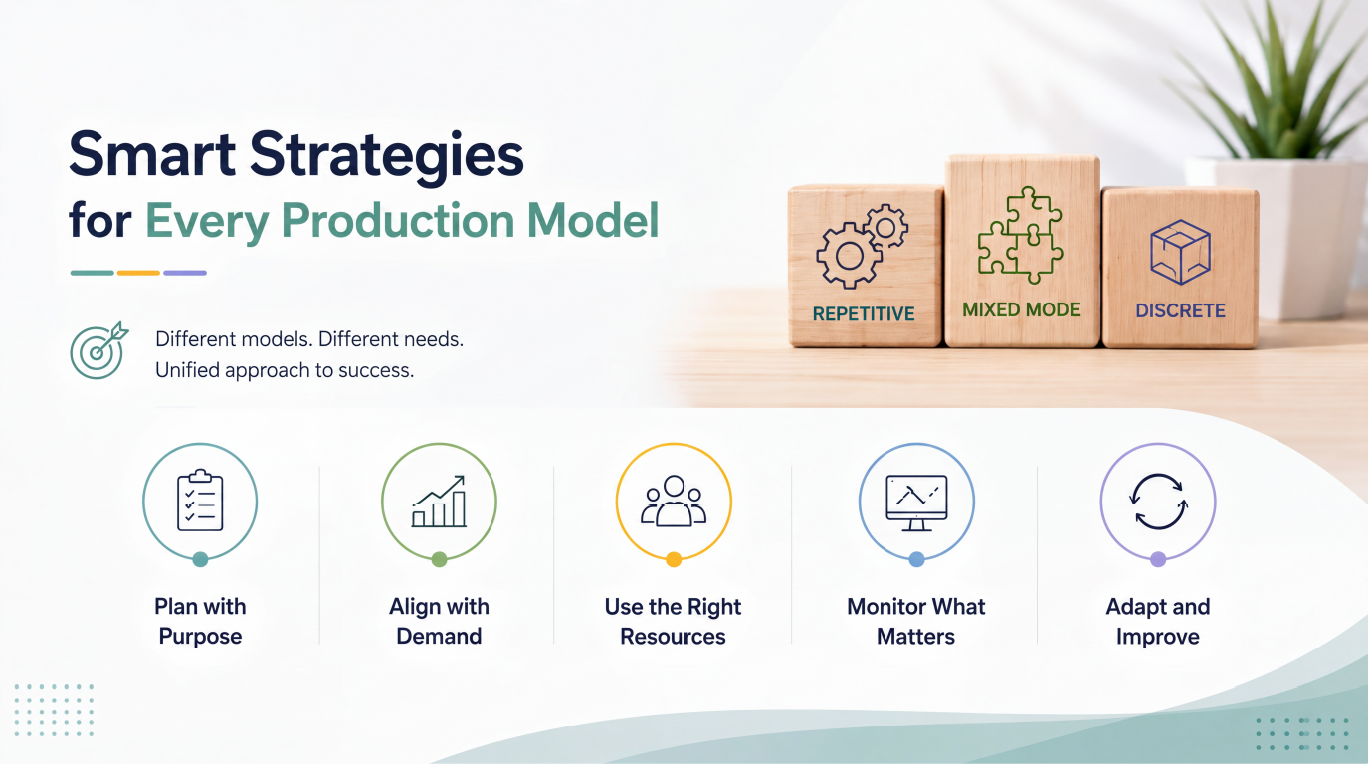
Manufacturers must follow standardized processes that support consistent operations while accommodating diverse production approaches, manufacturing methods, and demand requirements.
Standardized BOM and Routing Management
- Establish a centralized source for engineering and product data.
- Implement effective BOM update and revision management processes.
- Ensure consistent and accurate routing information throughout the production process.
Align Inventory Strategies with Production Requirements
- Apply safety stock policies for repetitive and high-volume manufacturing.
- Leverage demand-driven inventory planning for customized and engineered products.
- Maintain real-time inventory visibility.
Enhance Production Planning and Scheduling
Use Advanced Planning and Scheduling (APS) tools to:
- Identify bottlenecks.
- Balance workloads.
- Optimize resource utilization and production sequences.
Connect Shop-Floor Operations
Use the Shop Floor Execution System (SFES) to gain real-time visibility into:
- Production progress and order status.
- Workforce and equipment performance.
- Material usage and consumption trends.
Case Study: A Mixed-Mode Manufacturer Gains Control
A manufacturer of industrial filtration systems operated two production models within the same facility: custom engineer-to-order (ETO) projects and high-volume manufacturing of replacement components.
Key Challenges
- Varying planning and scheduling requirements across product lines
- Rising finished goods inventory levels
- Recurring delivery delays
- Limited visibility into production operations and inventory
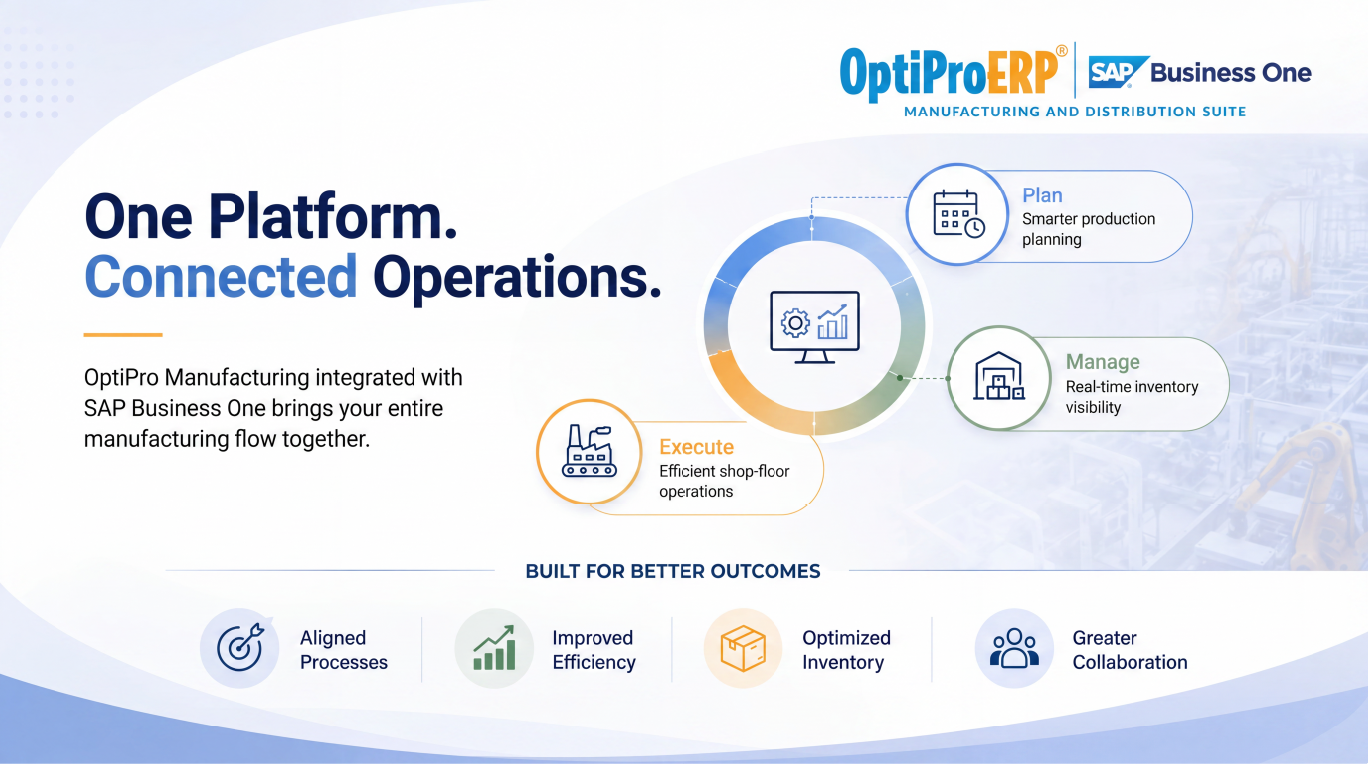
Solution Implemented: The company deployed OptiPro Manufacturing, integrated with SAP Business One, to connect production planning, inventory management, and shop-floor operations. This integration helped the company align its processes with the unique requirements of each production model.
Business Outcomes
- 45% increase in planning accuracy
- 22% improvement in inventory turnover
- 18% reduction in lead times
- Increased collaboration between production and engineering teams
Key Takeaway
Manufacturing success depends on selecting the right production approach for each product line. By aligning planning, inventory, and production processes with the requirements of discrete, repetitive, or mixed-mode manufacturing, manufacturers can improve efficiency, respond to changing demand, and achieve more consistent production outcomes.
FAQs
Discrete manufacturing focuses on producing distinct, identifiable products using structured, BOM-driven assembly processes. In contrast, repetitive manufacturing is designed for the continuous production of standardized products, with stable, predictable demand enabling consistent, high-volume output.
Yes. Manufacturers can use both approaches. For example, a manufacturer may adopt a mixed-mode approach, using discrete manufacturing for customized products and repetitive manufacturing for standardized, high-volume products. This approach enables manufacturers to balance operational efficiency with production flexibility.
BOM management is essential in discrete manufacturing because it ensures that production teams use the correct components, required quantities, and approved product revisions when building each product.
ERP supports mixed-mode manufacturing by enabling manufacturers to manage diverse production requirements within a single integrated system. This allows them to manage both customized and high-volume products using the most appropriate planning and execution processes.
You May Also Like